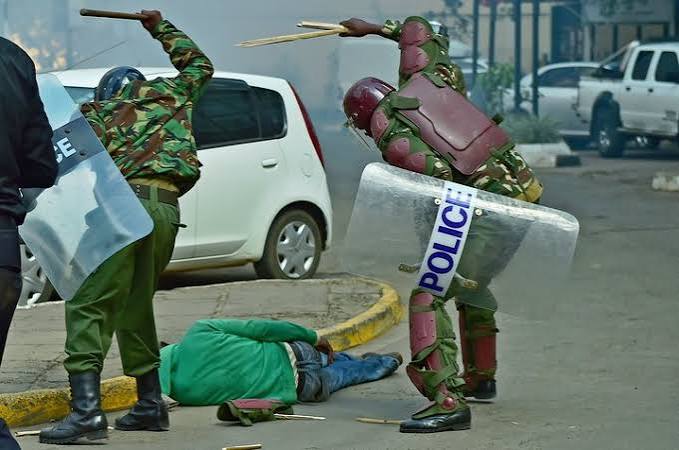
Police officers have a critical responsibility in protecting lives, maintaining public order and upholding the law. In Kenya, the Constitution establishes the National Police Service with a clear mandate to uphold professionalism, accountability, transparency and human rights.
Yet, allegations and reports of police brutality continue to raise serious concerns about the protection of human rights and the relationship between law enforcement and the communities they serve.
What Is Police Brutality in Kenya?
Police brutality refers to the unlawful or excessive use of force, abuse of authority, intimidation, torture, arbitrary detention or other forms of misconduct by police officers. While police officers may use force in certain circumstances, Kenyan law requires that such force be lawful, necessary and proportionate.
The National Police Service Act requires officers to use non-violent means whenever possible. Where force is necessary, it must be proportionate to the objective, the seriousness of the offence and the level of resistance encountered.
Police brutality therefore cannot be justified simply because an officer is exercising law-enforcement powers. The authority to enforce the law comes with a corresponding responsibility to respect human dignity and fundamental rights.
The Impact on Communities
Police brutality has consequences that extend beyond the immediate victim.
Victims may experience physical injuries, psychological trauma, loss of livelihoods and financial hardship. Families can also suffer when a loved one is injured, detained or killed.
At a broader level, repeated allegations of excessive force can erode public confidence in law enforcement. When people fear those responsible for protecting them, cooperation between communities and the police becomes more difficult.
This is particularly concerning because effective policing depends on public trust and cooperation.
The Right to Peaceful Protest
Kenya’s constitutional framework protects fundamental freedoms, including the right to peaceful assembly and expression. These rights are important mechanisms through which citizens can participate in public affairs and hold institutions accountable.
The exercise of these rights should not automatically make citizens targets of violence or intimidation.
At the same time, peaceful demonstrations should remain peaceful, and law enforcement has a legitimate responsibility to protect people and property. The challenge is ensuring that this responsibility is exercised within the law and with respect for human rights.
Excessive Force Is Not Lawful Policing
Kenya’s legal framework provides clear safeguards around the use of force.
The National Police Service Act states that officers should first attempt non-violent means. Force should only be used when those means are ineffective or unlikely to achieve the intended result, and the force used must be proportionate and necessary.
Where the use of force results in death or serious injury, the law provides for immediate reporting to the Independent Policing Oversight Authority (IPOA) and requires steps to preserve evidence and facilitate investigation.
These safeguards exist because accountability is not an obstacle to effective policing—it is part of effective policing.
The Role of Accountability
Addressing police brutality requires more than condemning individual incidents. Kenya needs strong systems that ensure allegations are independently investigated and that officers found responsible for unlawful conduct face appropriate consequences.
Accountability should include:
- Independent and timely investigations into allegations of police misconduct.
- Protection and support for victims and witnesses.
- Proper documentation of injuries and other evidence.
- Transparent disciplinary and criminal proceedings where warranted.
- Improved human-rights training for police officers.
- Stronger community-police engagement.
- Consistent enforcement of laws governing the use of force.
- Greater transparency around investigations and their outcomes.
The Constitution itself requires the National Police Service to uphold human rights, promote accountability and transparency, and maintain high standards of professionalism and discipline.
A Call to Protect Human Dignity
At VOCAL Africa, we believe that every Kenyan has the right to safety, dignity, justice and equal protection under the law.
Police officers deserve respect for the difficult work they perform, but the authority entrusted to them must always be exercised within the Constitution and the law. Protecting the public and protecting human rights are not competing objectives—they must go hand in hand.
We call for continued efforts to strengthen police accountability, protect victims of abuse, support independent oversight and promote constructive engagement between communities and law-enforcement agencies.
A safer Kenya is one where citizens can trust the police, police officers are supported to perform their duties professionally, and no one is above the law.
VOCAL Africa stands for a Kenya where justice is accessible, human rights are respected, and every person’s dignity is protected.